
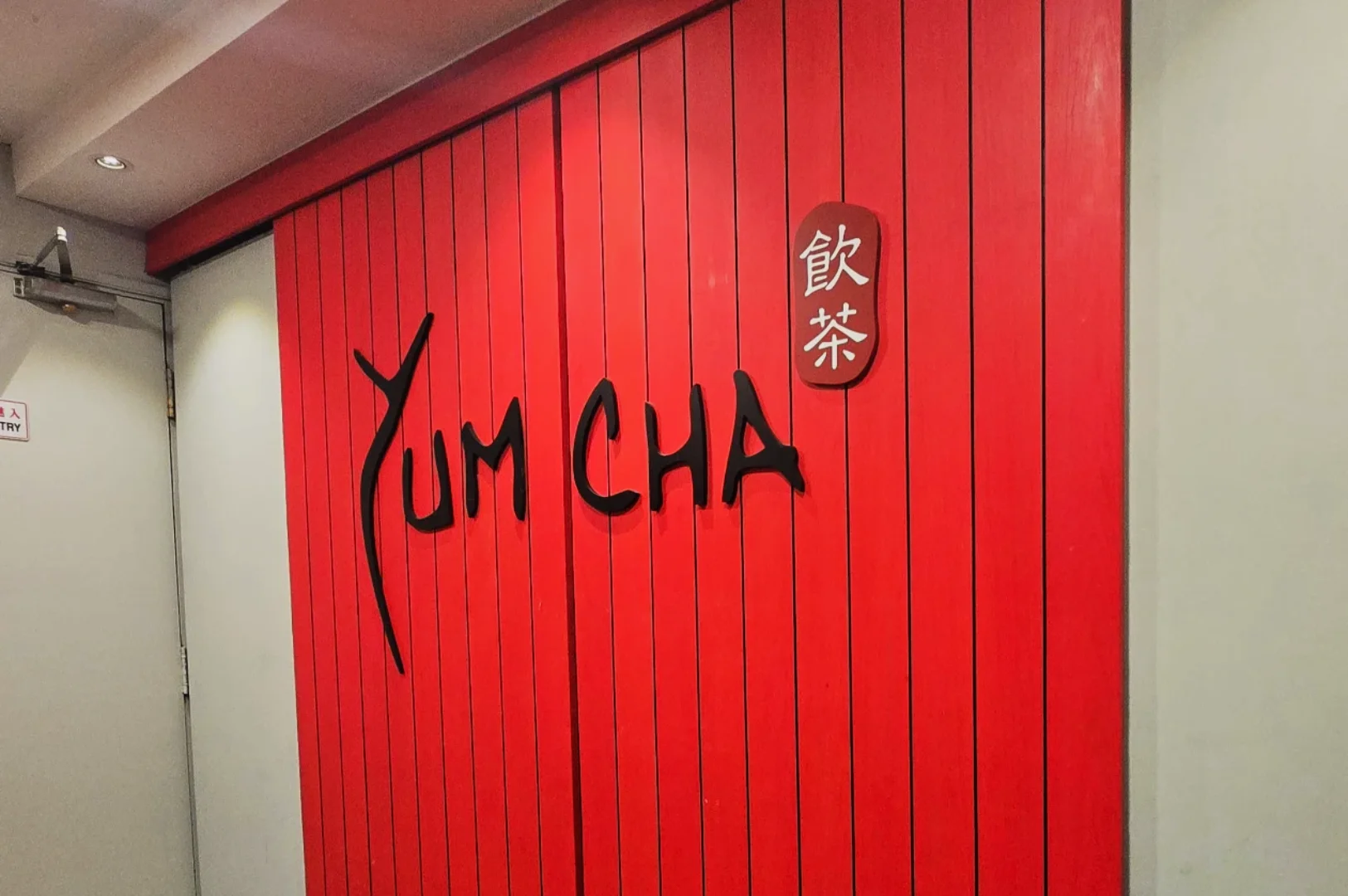
I walked past it on Temple Street. That’s the honest start.
Yum Cha has been here a long time. Long enough that I remembered it as a place locals went, back when Chinatown was still theirs. So I stepped in. Curious more than hungry.
The room told me something before the trolley did. Cameras out. Bags of souvenirs under tables. A queue of people who’d flown in to eat here because a guidebook said so. Chinatown has changed. This place changed with it.
Let’s not waste time. Here’s what actually landed on the table.
The Siew Mai

I started with the siew mai, the way you should.
Around eight dollars for the plate. That number stayed with me the whole meal.
The dumplings were fine. Pork, prawn, the usual build. But fine at eight dollars is not fine. Siew mai is the first thing you order at any dim sum table. It tells you whether the kitchen cares. This one told me it was counting on people who wouldn’t know the difference.
The skin held. The filling was decent. And that was all.
The Broccoli

Broccoli with mixed vegetables and mushroom.
Very ordinary. Cooked correctly, seasoned lightly, plated without thought. The kind of dish that fills a corner of the table and asks nothing of you. I ate a few pieces. I moved on. There’s nothing more to say, and saying more would be dishonest.
The Bean Curd Roll

Unremarkable.
Bean curd skin wrapped around filling, a little sauce. When it’s right, the skin carries a quiet chew and the inside stays juicy. This one just sat there. Not wrong. Not memorable. A dish going through the motions.
The Century Egg

I’ve had century egg my whole life. I know what it should be.
This wasn’t it. The version at Typhoon does more with the same ingredient: deeper, cleaner, priced like it respects you. Here it arrived overpriced and underwhelming. The yolk lacked that dark, creamy heart the good ones carry. It tasted like an afterthought, plated to fill the menu.
Too flat. And too dear for what it was.
The Kailan

Deep-fried kailan leaves with stir-fried chilli.
This one at least tried something. The leaves came out crisp, the chilli threaded through. Slightly different from the norm. I’ll give it that.
But different isn’t the same as good. It was a curiosity, not a dish I’d order again. Interesting for one bite, forgettable by the third.
The One That Got Away From the Kitchen

Here’s the thing that stayed with me.
A table beside me was eating hor fun. The smell reached me before the thought did; that dark, smoky lift a good wok gives it. I asked what it was. Then I ordered it.
And it was good. Genuinely good. The noodles carried char, the gravy sat where it should, silky without drowning them. The wok had done real work here.
Better still, it wasn’t overpriced. Not the way everything else was. It stood apart from the whole meal, like it came from a different kitchen entirely. Or a different intention.
Clean flavours. Clear intention.
I keep turning that over. The one dish I stumbled into by accident was the one worth eating. Nobody sold it to me. No trolley pushed it. I found it by looking at someone else’s table.
What Yum Cha Actually Is

Sit with the meal and the shape of it shows.
This is a dim sum house that stopped cooking for the neighbourhood and started cooking for the crowd passing through. The prices track a hotel restaurant. The food doesn’t.
That’s the part that sits wrong with me. Hup Lok at Carlton charges around the same, and Hup Lok is a different world; dumplings made by people who clearly care, plate after plate that earns its price. You pay, but you eat well for it. Here, you pay the same and eat like the kitchen assumed you’d never return anyway.
Because most people here won’t. That’s the quiet math of a tourist spot. You don’t cook for the regular who comes back Sunday after Sunday. You cook for the visitor who eats once, photographs it, and flies home.
I understand why it works. I just can’t pretend it worked on me.
Would I Return

No.
Not out of anger. The hor fun was real, and I mean that. If this were a small stall making only that plate, I’d come back for it and nothing else.
But it isn’t. It’s a full dim sum house charging serious money for food that mostly coasts. And Singapore doesn’t leave you short of better tables.
If you want casual dim sum, Tim Ho Wan will feed you well for less, without pretending to be more than it is. If you want the higher-end version, go to Hup Lok, where the price actually buys you something.
Yum Cha sits in between, charging like the second while cooking like neither.
Some meals stay with you for the food. This one stayed with me for the gap; between what a place once was, and what the crowd turned it into.
If you find yourself on Temple Street, drawn in by the age of the sign and the length of the queue, pause first. The queue isn’t locals. It’s people who don’t know there’s better a short walk away.
There is. Trust your own mouth over the guidebook.


发表评论