
Here is a rule that holds in most hotels I pass through: a buffet is only as good as the food its kitchen would cook for itself.
A kitchen that makes laksa every day will make it well. Ask the same kitchen to also cover lobster, roasts and half a dozen other countries, and something has to give. Usually it is the food nobody behind the pass grew up eating.
Atrium Restaurant tests that rule more cleanly than most rooms I know. It calls itself an international buffet. What it actually does well is local, and narrowly so. The rest is there because a hotel buffet is expected to have it.
That is not a complaint. It is a map.
One-Line Verdict: A halal-certified local feed that outperforms its Holiday Inn address, as long as you eat like someone who has read the map and you leave most of the ice alone.
The Room and How to Find It

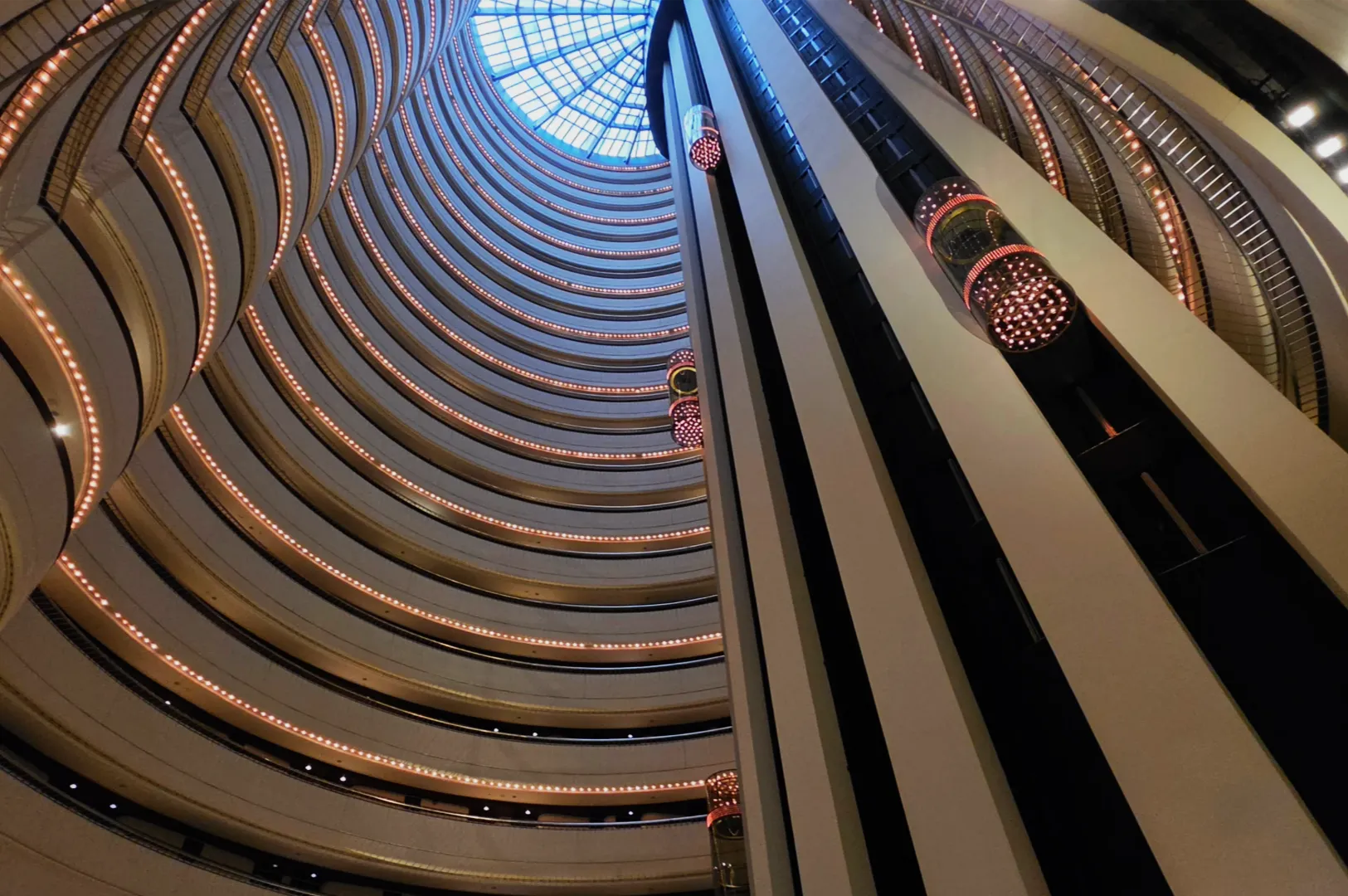
Atrium Restaurant is on Level 4 of Holiday Inn Singapore Atrium, 317 Outram Road, Singapore 169075. The hotel is operated by IHG. The restaurant is open to the public, not only to people holding a key card, and in-house guests take their breakfast here too. The room works three shifts a day, every day:-
- Breakfast: 6am to 10am on weekdays, running to 10.30am at weekends
- Lunch: 12pm to 2.30pm
- Dinner: 6pm to 9.30pm
The kitchen runs under Executive Chef Chua Yew Hock.
One more piece of context. The hotel went through upgrading works from April to June 2026. Any opinion of this place formed before then describes a building that has since had work done. I don’t have a record of exactly what changed, so I won’t guess. What I would say is that this kitchen’s reputation rests on its local cooking, and a renovation rarely changes how a pot of laksa is managed.
The fact that matters most comes next. Atrium is MUIS halal-certified, and there is a prayer room one minute’s walk away.
Read those two facts together and they settle questions most buffet listings never answer. A Muslim family planning a long dinner does not have to work out where to pray, or how far, or whether the timing of the meal will clash with it. Very few premium buffets in Singapore can offer that pairing. More than the word “international” on the sign, that tells you who this room is really for.
The short version of my view sits in a no nonsense shortlist of Singapore hotel buffets I put together earlier this year. I still stand by it. This is the longer version: the operation, the money, the sessions and the room itself.
The Spread in Three Lines
- Eat: the roti prata, before your plate has touched anything else.
- Skip: the seafood on ice, lobster included.
- Surprised Me: a Korean corner, in a halal room where I would not have bet on finding one.
Performance Breakdown

Hot Food Temperature and Consistency
The test I care about at any buffet is not how the food looks at 6pm. It is how it holds at 8pm, when the first rush has been and gone and the kitchen has started thinking about closing.
On the local hot dishes, Atrium passes. The laksa stays hot. That sounds small, but it isn’t. A laksa that is still hot late in service means someone is actually watching the pot, not just topping it up at the start and walking away. The rendang does not dry out, which is the usual tell of a tray left too long under the lamps. Both suggest a kitchen that knows how these dishes behave over a long evening.
The Western roasts are a different story. They are forgettable. They’re not bad enough to send back, and not good enough to remember on the drive home. The kitchen’s attention goes where its instincts are, and its instincts are not in the carvery.
Live Stations Competence and Queue Control
The live station on record here is roti prata. That is the one that earns the trip.
Prata is an unforgiving thing to put on a buffet. It is good for roughly as long as it takes to carry it back to your table. Leave it sitting in a tray and it turns limp, then leathery, then pointless. Cooking it live solves the problem, which is exactly why a live station exists in the first place.
On queues, the logic is simple. At a family buffet, a single popular live station is where a line forms, if a line forms anywhere. The control here sits with you, not the restaurant. Go to the prata station first, early in the session, before the room fills up and everyone else has the same idea.
Refill Cadence
I’ll be straight about the limits of what I can tell you. The record I trust does not give a tray-by-tray account of refills. What it does say, consistently, is that service here is patchy.
In my experience, refill pace and service quality usually come from the same small group of floor staff. When one wobbles, the other tends to follow. So here is my practical advice. If you’re booked for dinner, check the laksa and the prata station in the last stretch of service, between 8.30pm and 9.30pm. That window tells you more about an operation than the opening hour ever will.
Breadth Versus Hits
This is where my opening rule earns its keep.
The spread reads wide: international dishes, local signatures like chilli crab and laksa, the Korean corner, and themed runs such as the Nyonya Fusion weekday lunch and Wagyu Beef, Seafood and Suhaimi’s Buffet. On paper, it’s generous. On the plate, the hits cluster tightly around the local cooking, and the breadth beyond it is mostly decoration.
Which brings me to the cost of your own decisions. Every buffet charges you twice: once at the till, and once in stomach space. A plate of roast beef and lukewarm lobster is not free just because it’s included. It costs you the second round of prata and the bowl of laksa you’d actually remember.
The seafood is the clearest example. It’s the weak point of the whole operation, and the included lobster is only ever as good as its best day. If ice-counter spectacle is what you’re paying for, that is a different room with a different brief, and the grand-hotel version at The Line at Shangri-La is built around that kind of ceremony. Atrium isn’t, and it doesn’t need to be.
If breadth itself tires you, and you’d rather have a short menu cooked with care, Basilico at Conrad Singapore Orchard works on the opposite principle entirely. Atrium is for people who want a big room and are willing to edit it themselves.
Desserts
Nothing in the record I’d stand behind makes the dessert table a reason to book. I would rather tell you that than describe a cake I can’t vouch for.
My advice is to plan around it. Save your space for the savoury local dishes. If something sweet catches your eye on the way out, treat it as a bonus, not the point.
Crowd Reality
Look at the economics and you can predict the room. Kids under five eat free. Lunch promotions run 1-for-1, with 50 percent off for selected cards. Deals like these fill a restaurant with families, and families bring prams, birthdays and a steady background hum.
That isn’t a flaw. It’s the room doing what it was priced to do. But it does mean the patchy service shows most when the place is full. A drink can take longer than it should. Plates may sit a while before anyone clears them. If you’re particular about either, order your drinks the moment you sit down, and don’t expect the floor to read your mind when every table is busy.
Best Bites

- Roti prata: the live station, and the reason to come at all. Eat it while it’s still crisp.
- Laksa: stays hot late into service, which tells you someone is minding the pot.
- Rendang: keeps its moisture under the lamps, which plenty of buffet rendang does not.
- Chilli crab: one of the local signatures. If you want crab here, take it in sauce from the local line, not off the ice.
- Korean corner: an unusual find in a halal buffet, and worth a plate before you settle into the local food.
Misses

- Seafood on ice: the weakest part of the operation. The lobster is best case, never better.
- Western roasts: forgettable. They take up plate space and give little back.
- Service: patchy. Drinks and plate-clearing depend on who is working the floor that night.
- Price clarity: published figures disagree, and promotions shift them again. You have to do your own homework before you book.
Worth It If / Skip If

Worth it if:
- You need a MUIS halal-certified buffet with a prayer room one minute away.
- You’re feeding a family and the kids-under-five rule plus a 1-for-1 deal changes your sums.
- You’d rather eat well from a narrow selection than eat everything averagely.
- You want local cooking done properly, without paying for spectacle you won’t eat.
Skip if:
- Seafood is the main reason you go to buffets.
- You expect consistent, attentive service every time.
- You want a quiet, adult room on a weekend evening.
- You struggle to walk past the roast beef. Some of us do.
Buffet Prices

Every figure below was checked on 13 October 2026, and every one is a ++ price. That means the number on the menu is not the number on your bill. Hotel buffet pricing moves monthly, so treat these as a starting point, not a quote.
- Atrium’s page: weekday lunch from S$99++, weekday dinner from S$128++.
- Wagyu Beef, Seafood and Suhaimi’s Dinner Buffet: weekday dinner S$128++, weekend dinner S$138++ with a 1-for-1 promotion and 50 percent off for selected cards.
- Children: kids under five eat free.
You’ll notice the figures don’t line up neatly. The S$98++ and S$99++ lunch prices come from different sources, describe what may be different lunch programmes and some third-party listings show other numbers again. I’m not going to pretend they match. On top of that, promotions move the real cost far more than the sticker does. A 1-for-1 deal halves what each person pays, so the menu price matters less than which offer is running on the day you go.
There is no published reservations email. Check the hotel’s own dining page for current offers before you book, and read the terms on any card discount. That is the sum that actually reaches your table.
Closing Line

This is a small part of a slower project. RERG is going through Singapore’s hotel buffets properly, one room at a time, rather than ranking forty of them off a price list. Atrium is a useful reminder of why that matters. On a price list, it looks like an ordinary Holiday Inn spread. In the room, it turns out to be a local kitchen quietly doing its job.
Eat the prata while it’s hot. Have the laksa. Walk past the ice. Atrium won’t flatter you, but if you let it cook what it knows, it feeds you honestly.
J.C. Yue is often in transit, and hotel buffets are her most reliable in-between meal in Singapore. She reviews them for RERG on what the room actually delivers: what is worth returning for, and what is not.
发表回复