
We had just come out of an event nearby and realised it was already pushing 9pm. At first, we wanted to have dinner somewhere else, but the moment we saw the queue, and at that hour, hunger starts making decisions faster than pride.
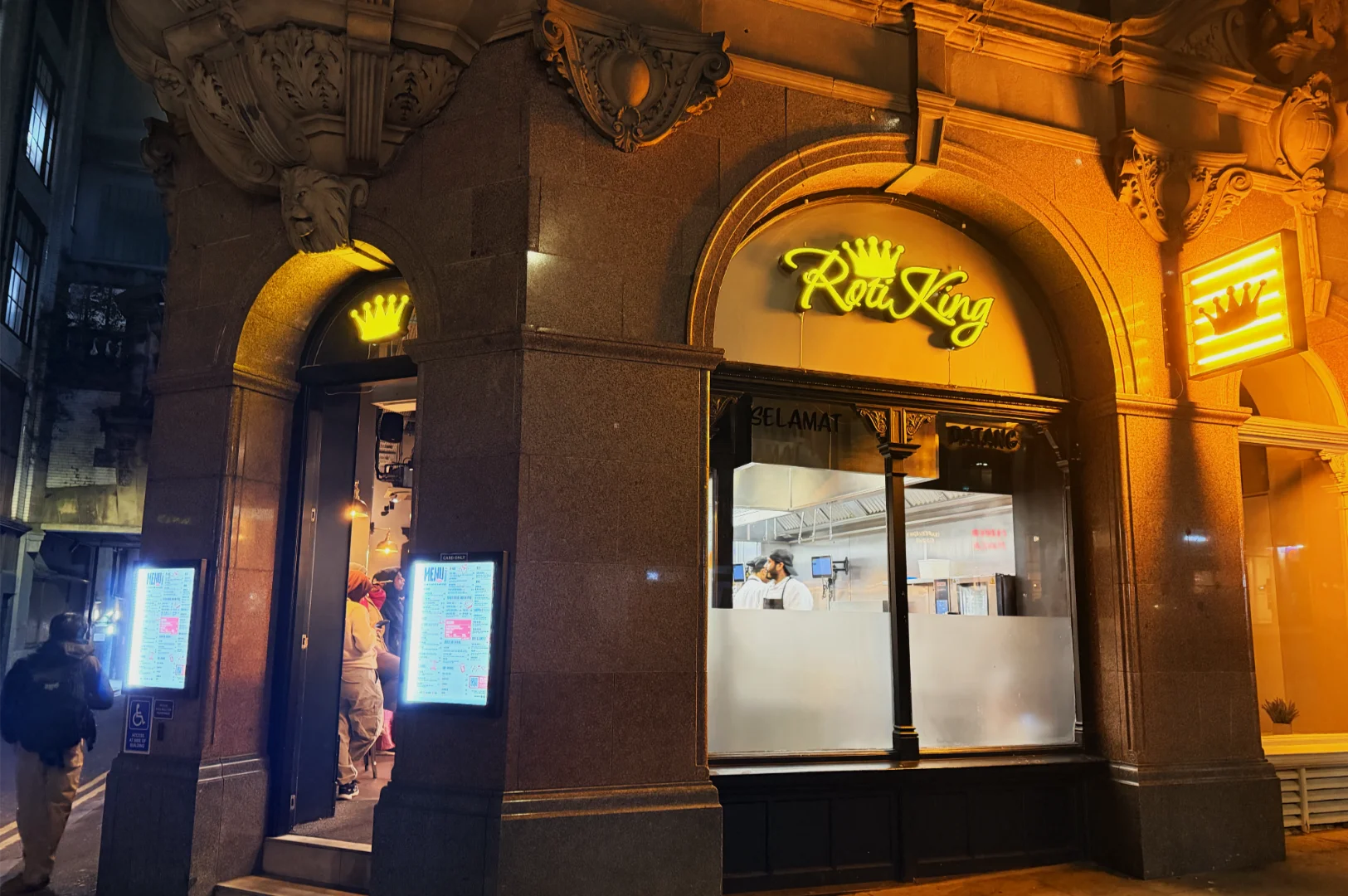
So we ended up at Roti King Edinburgh instead. There was still a short wait, around 10 to 15 minutes but nothing dramatic. Fun fact: Roti King first built its reputation in London before opening in Edinburgh and the thing it became known for was exactly what we wanted at that point: proper Malaysian roti canai.
Once inside, we could see the chef stretching and flipping the dough before it hit the counter. For a second-choice dinner, this was beginning to look suspiciously promising.
The Roti Canai With Dhal Got Very Close to Home

This was the dish we were most suspicious about.
Then we tore into the Roti Canai with Dhal and relaxed.
The roti was properly flaky, buttery and soft through the middle, with crisp edges breaking into thin layers as we pulled it apart. Seeing it made in-house mattered because it ate like freshly cooked roti rather than something reheated from a packet.
The dhal was even more reassuring. It was thick enough to cling to the roti, with lentils still visible through the curry rather than blended into anonymous orange soup. There was warmth from the spices, enough savouriness to keep us dipping and none of that watered-down feeling we sometimes fear when Malaysian food travels abroad.
Roti, dhal, fingers. Suddenly Edinburgh felt much closer to home.
Nasi Goreng: Huge Plate, Small Excitement

The Nasi Goreng arrived looking enormous which was excellent news because we were starving.
Then we ate it.
The rice carried a faint smoky edge but seasoning-wise it felt strangely quiet. There was almost no chilli heat and not enough savoury depth to make us keep digging into it with enthusiasm.
To its credit, Roti King is generous with the protein. There were slices of chicken and several plump prawns scattered throughout. The prawns had that firm texture we associate with frozen seafood but at least they were juicy rather than fishy or miserable.
Value-wise, this was a lot of food. Flavour-wise, it mostly made us remember how spoiled we are back home.
Mee Goreng Was Considerably Better

The Mee Goreng recovered the table. Egg noodles came tossed with chicken, prawns, tofu, egg, bean sprouts and, unusually for us, peanuts.
The noodles hit a good middle ground: glossy without swimming in sauce, moist without becoming soggy. There was a faint chilli warmth underneath the sweet-savoury seasoning, but nothing that would scare anyone who normally avoids spicy food.
The peanuts sounded odd to us at first, but the occasional crunch actually helped break up the softer noodles.
Between the two fried carb dishes, take the mee goreng. Easily.
Nasi Lemak Looked the Part and Mostly Tasted It Too

The Nasi Lemak was probably the prettiest plate of the meal.
Coconut rice sat in the middle surrounded by cucumber, boiled egg, peanuts, fried anchovies, sambal and a very substantial piece of fried chicken. The rice carried a noticeable coconut richness, while the chicken arrived crisp outside and juicy enough inside.
The sambal was sweeter and tangier than the deeply anchovy-heavy versions some people favour. There was a proper spicy kick, but very little aggressive belacan funk.
That will divide people.
If your ideal sambal announces itself from three tables away, this may feel restrained. We liked it. The sweetness, chilli and acidity worked well with the creamy rice and salty anchovies.
The Kari Laksa Was Thick in the Best Way

The Kari Laksa looked almost intimidating when it arrived.
The orange-red coconut curry broth was thick, creamy and rich enough to coat the egg noodles, with tofu and seafood tucked throughout the bowl. This was emphatically not thin curry water pretending to be laksa.
The coconut richness came first, followed by curry spice and only modest chilli heat. We might have liked a little more punch, but the broth had enough body and savouriness that we kept returning to it anyway.
It was the kind of laksa where you finish the noodles, then realise you are still spooning up the broth.
Teh Tarik Looked Correct. That Was the Problem.

Visually, the Teh Tarik had us excited. That familiar caramel-brown colour had all the right signals.
Taste-wise, the signal dropped.
The tea itself was faint and the sweetness was far more restrained than the condensed-milk-heavy teh tarik we are used to. Our best guess is that the milk balance is simply lighter here because what we missed was both the strong tannic tea and that unmistakable creamy sweetness.
If you are homesick specifically for teh tarik, this probably will not cure you.
Which was funny, because the food had largely done the opposite.
So, Was Roti King Edinburgh a Good Late-Night Find?

For Singaporeans and Malaysians travelling through Edinburgh, yes, especially if you order selectively.
The nasi goreng was forgettable and the teh tarik did not quite cure the homesickness, but the roti canai with dhal was genuinely good, the mee goreng surprised us, the nasi lemak held its own and the kari laksa delivered the creamy richness we wanted.
Earlier in the trip, Gladstone’s Land on the Royal Mile had been a much calmer stop for tea and hot chocolate. Roti King was the opposite: busier, heavier and exactly the kind of dinner we needed by the time 9pm rolled around.
Roti King may have built its reputation in London, but tearing into hot roti with thick dhal in Edinburgh, we understood why people queue for it.
Order the roti first. Everything else can negotiate for table space afterwards.

发表回复