
Little Island Brewing Co runs two spaces in Singapore that share a name and almost nothing else. One is a brewery. One is not. That distinction matters more than most marketing copy will tell you, and it is the first thing worth sorting out before deciding which outlet deserves your evening.
Only Changi Village actually brews beer. South Beach does not.
That single fact shapes everything else about these two venues: what they can serve, how they feel, and who they are actually built for.
So Which One Actually Brews The Beer?

Changi Village is the brewery proper. It sits in an open-sided shed by the water, with a smokehouse kitchen attached to the operation rather than bolted on as an afterthought. The tanks are there. The beer is made there. If you want the version of Little Island Brewing Co that starts with grain and ends with a pour, this is the only outlet that qualifies.
South Beach, on the other hand, is a taproom and nothing more. No brewing happens on site. It occupies the space formerly known as Alchemist Beer Lab, at 26 Beach Road #B1-16, Singapore 189768, and its job is to pour, not to produce. That is not a criticism. Plenty of good bars don’t brew their own beer. But it is a fact that should be stated plainly, because the shared branding makes it easy to assume both locations are cut from the same cloth. They are not.
What Does Changi Village Actually Feel Like?

The brewery leans into its setting. It’s open-sided, which means the breeze does some of the atmosphere’s work for you, and the water views do the rest. Self-pour taps let you control your own pace, which suits a venue that also hosts live music on select nights and caters to large groups and private events. This is a place built for lingering, for groups that spill across multiple tables, for an evening that doesn’t need to be rushed.
The food comes from a smokehouse kitchen, and recent reviews have been consistent on one point: the starters outperform the mains. That’s worth knowing before you order, because it changes how you should approach the menu. Lead with the smaller plates. Treat the mains as a formality rather than the main event.
If you want the full brewery experience, with beer made on the premises and a setting that rewards slow evenings, Changi Village is the one to book.
What Is South Beach Actually Selling You?

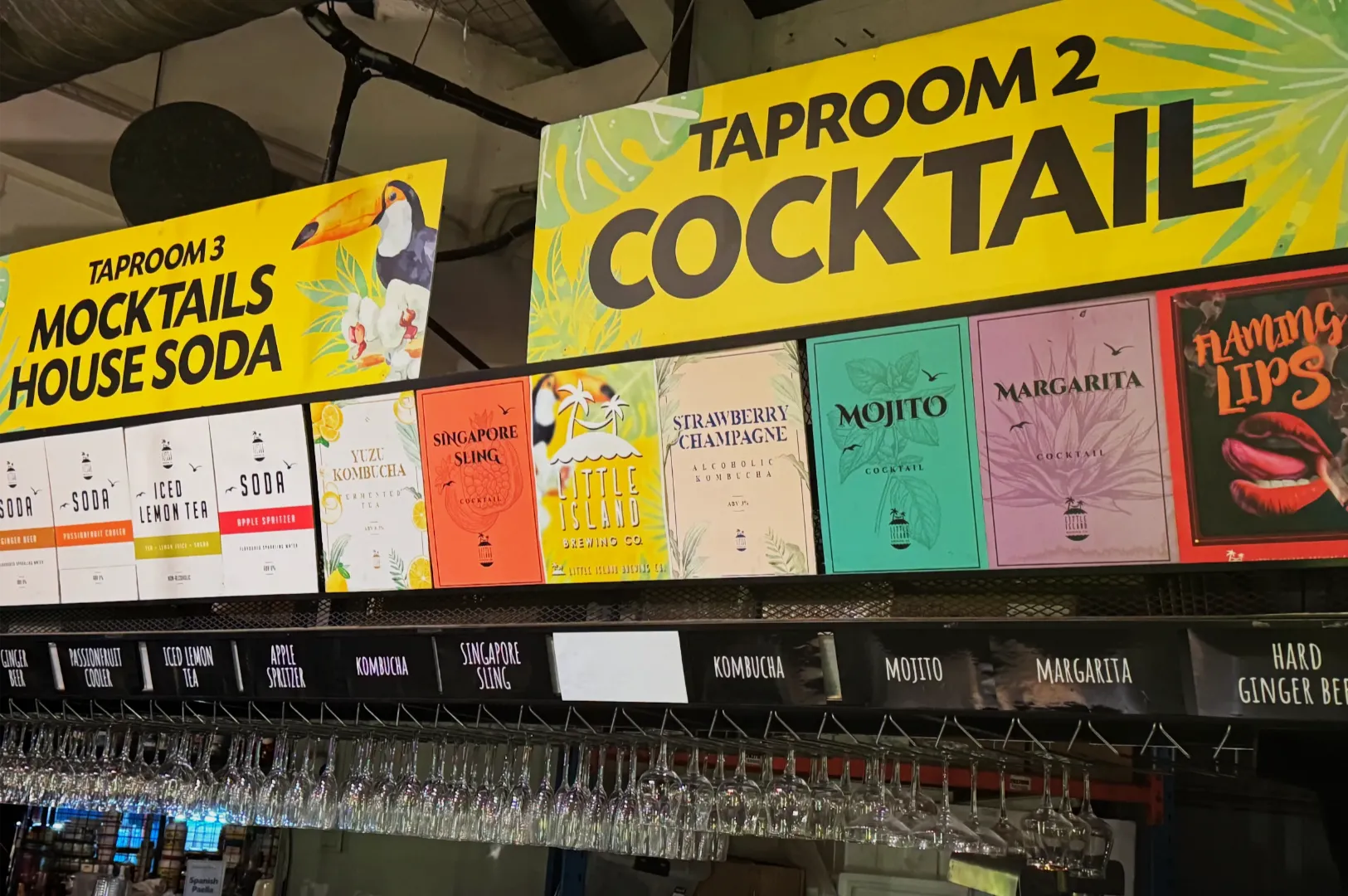
South Beach is a different proposition entirely. With 20 copper taps and another 12 self-pour taps, the sheer volume of choice is the main draw. It also serves pre-batched beer cocktails and US pints, and runs a Hoppy Hour for those timing their visit around a deal. This is downtown drinking, built for convenience and variety rather than atmosphere or provenance.
There’s no smokehouse kitchen here, no shed by the water, no sense that you’re watching anything being made. What you get instead is a central location, a long tap list, and the kind of efficient service that suits a quick after-work stop rather than a lingering celebration. It shares a name with the brewery, but functionally, it behaves more like any well-stocked craft beer bar in the CBD.
For a sense of how the no-kitchen format plays out elsewhere, Smith Street Taps runs a similar model: taps without a kitchen attached, built for drinking rather than dining. South Beach sits in that same category, just with a broader self-pour selection.
So Who Should Go Where?

Go to Changi Village if you want the actual brewery, don’t mind travelling for it, and are bringing a group that wants to settle in for a few hours. Order the starters first. Expect live music on some nights. Book ahead if you’re coming in numbers, since private events are clearly part of their business.
Go to South Beach if you’re downtown, short on time, and more interested in working through a long tap list than in provenance. It’s the pour-and-go version of the brand: convenient, well-stocked, honest about what it is once you know to ask.
Skip Changi Village if you’re expecting a quick, central visit. It’s not built for that.
Skip South Beach if you came specifically to see where the beer is made. You won’t find it there.
The tension I started with, two outlets under one name, resolves once you stop expecting them to be interchangeable. They’re not competing versions of the same bar. They’re two different answers to two different questions: where do I want to drink, and where do I want to watch beer get made.
If you’re after a different kind of comparison, where distance is genuinely worth it rather than a downtown convenience, another place worth travelling for made a similar case recently, just with eight seats and a very different menu.
For the rest of the taprooms worth your time, the list keeps growing.
发表回复