
The first time you visit Malacca, the itinerary practically writes itself.
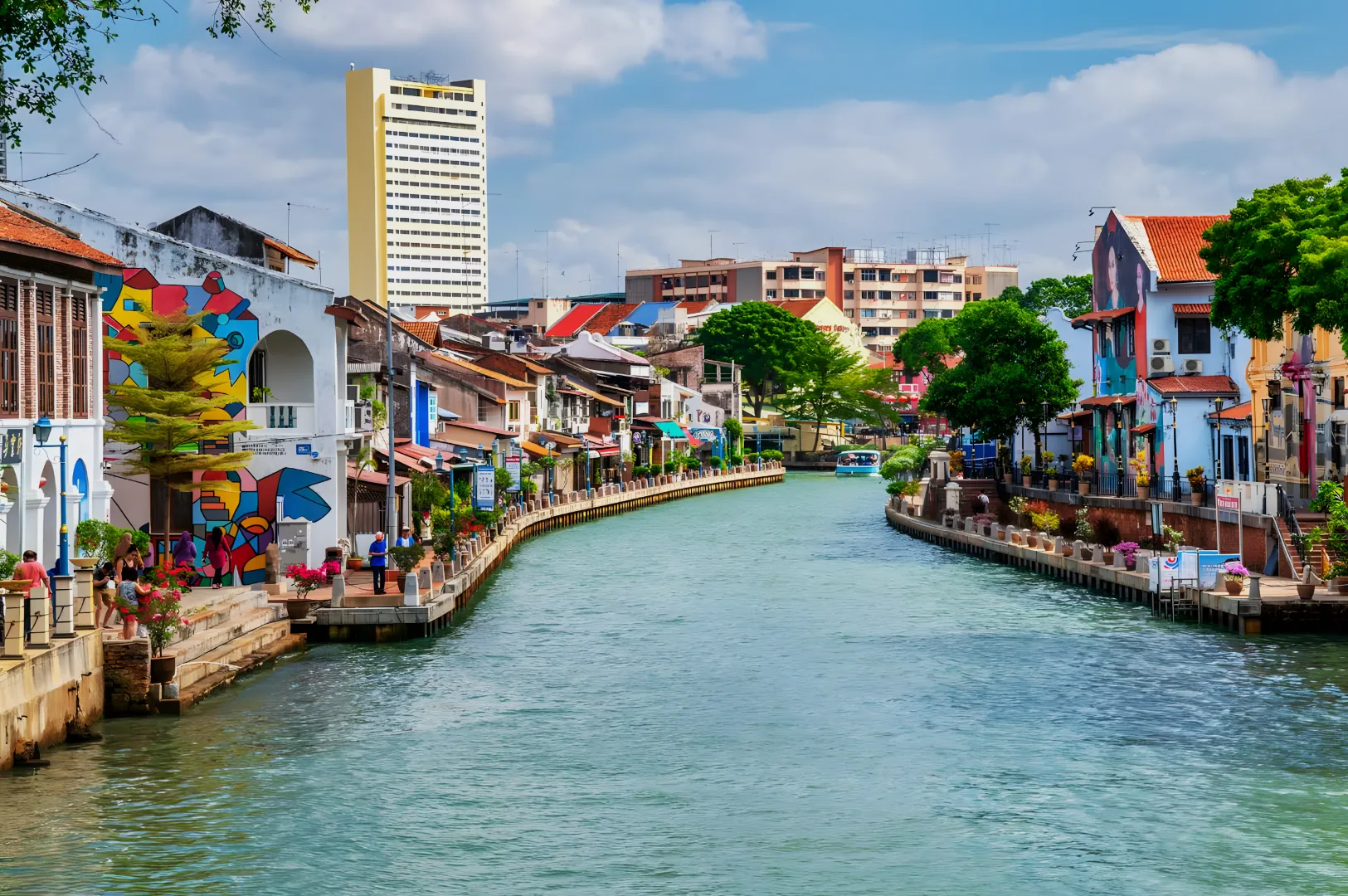
You photograph the iconic red buildings around Dutch Square, cross over to Jonker Street, eat chicken rice balls, climb Paul’s Hill, see Paul’s Church, take a Melaka River Cruise and eventually find yourself wondering whether one person really needed this many photographs of Christ Church Melaka.
There is nothing wrong with that. Melaka’s UNESCO World Heritage Site status exists for a reason, and the compact historic center contains enough rich history to keep a first-time visitor occupied for a weekend.
But after doing the standard circuit, we started looking for the stranger corners. The first Melaka trip is red buildings and rice balls. The second is when you start opening doors.
This list of unusual things to do in Melaka is for that second trip. Some are genuine Melaka hidden gems, others are hiding in plain sight ten minutes from the crowds. Together, they get into printing, family homes, Chinese history, contemporary art, instant-noodle nostalgia, ghosts and eventually dangling from trees.
If you have not done the classics yet, start with our full guide to things to do in Malacca first. That covers the major first-trip stops properly.
This one is for when you are ready to get weird.
Before You Visit Malacca: This Is Not Another Jonker Street Night Market Checklist

For context, we are deliberately not using the Jonker Street Night Market as one of the eight entries below. The famous night market along Jalan Hang Jebat still runs on weekend evenings, and Jonker Walk remains one of the easiest places to find street food, souvenir shops, cafes and crowds. It is absolutely worth seeing, particularly if you are arriving from Kuala Lumpur or Melaka Sentral and this is your first time in Melaka, Malaysia.
But you already know about Jonker.
We Already Covered the Melaka Sultanate Palace Museum, Maritime Museum and Masjid Selat Melaka
The same applies to the Melaka Sultanate Palace Museum, History and Ethnography Museum, Maritime Museum, Taming Sari, Portuguese Settlement and Masjid Selat Melaka.
The Maritime Museum, housed around the giant replica of the Flor de la Mar, explains why the port mattered. The Ethnography Museum gets into local communities and the city’s past. The reconstructed palace deals with the Malacca Sultanate, while the Melaka Straits Mosque, or floating mosque, is still one of our favourite sunset stops.
We covered those in the main guide because they belong in a first Melaka itinerary.
Now we go looking elsewhere.
The Royal Press Is a City Center Museum About Ordinary Things

A few steps from the busiest part of the city center, The Royal Press is exactly the sort of museum we like: small enough that visiting it does not become an endurance sport, but specific enough that you leave knowing something you did not know before.
The printing business dates to 1938. Today, the space operates as a living polyglot letterpress museum containing more than 150,000 letter blocks covering Roman alphabets, Chinese characters, Arabic and Tamil scripts. There are old printing machines too, but we found the everyday printed material more interesting: labels, calendars, tickets and commercial ephemera that once passed through ordinary hands.
That is what distinguishes it from another museum filled with dates and rulers. The Royal Press tells Melaka’s history through things people actually used. A bus ticket may not sound historically important until you realise it tells you where people travelled, what businesses existed and what languages were being printed for the city’s different communities.
The museum is especially good for history buffs, graphic designers, writers and anyone interested in the city’s historical background beyond battles and colonial governments. Current published opening hours are 10am to 5pm daily, but we would still check before making a special trip.
After several museums where the most interactive feature is usually a “Do Not Touch” sign, seeing just how much physical labour went into putting words onto paper gave us a new respect for the humble printer.
Kampung Morten Is Malay Heritage Hiding Beside the Melaka River

The Melaka River can make Kampung Morten look like another pretty backdrop.
It is not.
Kampung Morten is a living Malay village beside Sungai Melaka, surrounded by a modern city that has somehow grown around it. Traditional timber houses sit along narrow lanes, some with decorative stairs, verandas and carefully maintained gardens. Villa Sentosa is the best-known house visitors can enter, operating as a private living museum filled with household objects and family possessions.
What made the area interesting for us was the contrast. One minute you are looking at traditional Malay heritage architecture; the next, a modern tower or boutique hotel appears behind the roofline.
You can technically see Kampung Morten from the river cruise, but we would get off our backside and walk it. The lanes reveal details that disappear when you are floating past on the Malacca River taking photographs from a boat.
The important thing is remembering that this is a neighbourhood, not an open-air museum. People still live here. Not every wooden house is available to enter, and a resident’s front porch is not a public photo studio. Stick to the public routes and ask before photographing people or private property. Tourism guidance recommends roughly 90 minutes for a leisurely visit, with Villa Sentosa treated as a scheduled visitor stop rather than assuming it is permanently open for entry.
Melaka does monumental history loudly. Kampung Morten shows the daily lives that continued underneath it.
Why This City Center Experience Feels Different From Kampung Kling Mosque
The difference becomes clearer when you compare it with Harmony Street, where Kampung Kling Mosque, Cheng Hoon Teng Temple and Sri Poyatha Moorthi Temple sit near one another.
Kampung Kling Mosque traces its story to Indian Muslim traders, while Cheng Hoon Teng reflects generations of Chinese community life. Sri Poyatha Moorthi is widely regarded as Malaysia’s oldest Hindu temple still functioning.
Those religious landmarks explain Melaka’s multicultural history through institutions.
Kampung Morten explains it through houses.
A Bukit Cina Walking Tour Gets Into the Chinese History Most Visitors Miss

Bukit Cina is not really a hidden hill. It is simply one that many tourists ignore.
The burial ground sits outside the brightest part of the old town and forms part of the UNESCO heritage buffer zone. Melaka’s World Heritage conservation documents describe Bukit Cina as one of the oldest and largest Chinese burial grounds outside China, with its history tied to the long-established Chinese community in the city.
This is where a walking tour starts revealing a very different Melaka.
The cemetery sprawls across the hill, with old graves scattered through greenery rather than arranged like a conventional modern cemetery. Around the area you can also see Poh San Teng Temple and Hang Li Poh’s Well. The stories attached to the hill are tangled in migration, community memory and legends that reach back towards early Sino-Melaka relations.
There is darker history too. The Melaka Warrior Monument at Bukit Cina commemorates Chinese victims connected with resistance to the Japanese occupation. That pushes the chronology far beyond the usual Portuguese-Dutch-British sequence tourists hear repeatedly in the center.
Bukit Cina is where the story of Chinese immigrants in Melaka stops being decorative heritage and starts becoming about settlement, death, memory and belonging.
It is quieter than Jonker and demands a little more effort. Go in daylight, bring water and wear comfy shoes. This is not somewhere we would rush between lunch reservations.
From Kampung Kling Mosque to Bukit Cina: A Walking Tour Through More Than All the History
It also completes the story you start around Harmony Street. There, temples and mosques demonstrate trade-era coexistence. Here, burial grounds show how deeply communities became rooted.
Melaka can occasionally feel as though it has packaged all the history into manageable tourist portions. Bukit Cina resists that. There is no bright facade demanding a selfie.
You have to slow down.
Baba Nyonya Heritage Museum Makes Peranakan History Personal

The Baba Nyonya Heritage Museum was one of those places where the building itself did more explaining than a wall of text ever could.
The museum occupies three connected terrace houses acquired by the Chan family in 1861. Four generations lived there before the property opened as a museum in 1985, and descendants of the family continue to preserve it. Inside, the details tell the story: carved timber, screens, furniture, family spaces and carefully structured rooms that reveal how a prosperous Peranakan household functioned.
This is where the phrase Chinese and Malay influences starts becoming less abstract. Peranakan identity developed through generations of cultural mixing in Southeast Asia, and the house gives those influences physical form.
You start noticing how entertaining, privacy, family hierarchy and domestic routines were designed into the architecture itself. The most interesting object here may actually be the house.
The museum is more intimate than the larger History and Ethnography Museum because you are not just reading about a community. You are moving through rooms where generations of one family lived.
For anyone interested in the historical significance of Nyonya culture, this is one of the better uses of an hour near Jonker. The Nyonya Heritage Museum is also within easy walking distance of the busiest heritage streets, so it is simple to combine with food or shopping rather than building the whole day around it.
Mamee Jonker House Lets You Turn Instant Noodles Into a Souvenir

There comes a point in every heritage-heavy trip when somebody says, “Can we do something that does not involve a colonial power?”
Enter Mamee Jonker House.
At 46–48 Jalan Hang Jebat, Mamee’s concept store combines merchandise, food and hands-on activities built around a snack most Malaysians already recognise immediately. The Noodle Doodle experience lets you decorate your own noodle cup, then choose seasonings and condiments for it. There is also a Lil Monster Kitchen concept explaining how the famous snack is made.
Is this historically significant? No.
Did we need a personalised instant-noodle cup? Also no.
Holidays are where unnecessary souvenirs acquire constitutional protection.
That is precisely why this works as one of the more unique things to do in Melaka. After temples and museums, sitting down to decorate instant noodles is refreshingly unserious.
There is a cafe as well, so the stop can become lunch rather than merely a novelty. The wider Jonker area remains better if what you really want is Malaysian cuisine, nasi lemak, chicken rice balls and maximum eating efficiency, but Mamee works when the experience itself is the attraction.
The Orangutan House and Lorong Hang Jebat Turn Street Art Into a Treasure Hunt

We like street art more when nobody gives us a numbered checklist. Start with The Orangutan House, the studio-gallery established by Malaysian artist Charles Cham, then wander around the surrounding lanes and see what survives.
That last part matters. Street murals are temporary by nature. Paint fades. Buildings change. New work appears. An Instagram guide written five years ago can send you looking at a beautifully blank wall. So rather than treating the art like a museum collection, we would walk Lorong Hang Jebat, Jalan Tukang Besi and the smaller routes connecting Jonker to the river. The fun is noticing murals, painted shutters and little pieces of visual chaos while moving between other stops.
Melaka’s heritage core is famous for preserved architecture, but this newer layer matters too. A UNESCO heritage status should not mean a city stops producing new culture.
If the heat starts winning, we would insert a cafe break. Daily Fix Cafe sits behind a shop at 55 Jalan Hang Jebat and is known for coffee, pancakes and a courtyard setting hidden behind the busy street frontage.
We are not going to pretend one cup settles the national debate over Malaysian coffee, but this is as good a point as any to sit down with a local coffee and stop walking for half an hour. Especially because the next mural will still be there after caffeine. Probably.
Ghost Museum Melaka Is for When Your Brain Has Had Enough History

By day two, there is a danger that every sentence begins sounding like this: “Originally constructed in the eighteenth century…”
That is when we prescribe ghosts. Ghost Museum Melaka is a staged attraction built around supernatural characters and horror imagery, with mannequins, themed scenes and costumes that visitors can use for photographs.
Do not come expecting an academic examination of Malaysian folklore. This is not that museum. It is kitschy. It is theatrical. Some of the figures are creepy, others are one bad camera angle away from comedy. That is why we included it.
If everybody’s eyes glaze over when somebody says “historical significance” again, put them in a room with a fake ghost.
Melaka already has a healthy appetite for strange tourist entertainment. The same city that gives you centuries-old churches also gives you LED trishaws covered in Hello Kitty characters. There is room for both.
Families with older children, groups of friends and people who enjoy deliberately silly photographs will get more out of the Ghost Museum than serious folklore researchers.
Come for fun, not enlightenment. Your enlightenment can resume tomorrow morning.
Skytrex Melaka Is What Happens When You Finally Leave the Old Town

After several days in the heritage center, we became increasingly aware that most of our exercise involved walking between meals. Skytrex Melaka fixes that.
The adventure park is in Ayer Keroh rather than around Jonker, close to the highway approach into the city. Its aerial courses run through the forest with obstacles including ziplines, the Skybike, UFO and Tarzan Bungee Swing. Current 2026 online rates are RM60 for Little Dino, RM70 for Pahlawan Thrill and RM80 for the advanced Extreme Warrior circuit, with departures running from 9am to 3pm.
The courses increase in difficulty, so choose according to your actual fitness rather than the fitness level you imagine yourself possessing while booking from an air-conditioned room.
Then there is SkyNight. Selected night sessions run on the intermediate Pahlawan course, starting at 8:30pm. They are restricted to adults over 18 and involve completing the forest obstacles after dark, with a headlamp required.
This is probably the most genuinely unusual experience on the list.
After two days of reading plaques, clipping yourself onto a cable and crossing a dark forest suddenly feels extremely therapeutic.
So Which Melaka Hidden Gems Are Actually Worth Your Time?

The phrase “hidden gem” gets abused online.
A place does not need to be undiscovered by local people to qualify. This is Melaka, one of the most visited destinations in Peninsular Malaysia. If something is genuinely secret, somebody is probably trying to keep tourists away from it.
What matters is whether it shows you another side of the city.
The Royal Press gives you everyday working history. Kampung Morten shows living Malay heritage. Bukit Cina gets deeper into migration and memory. The Baba Nyonya Heritage Museum makes Peranakan family life tangible. Mamee Jonker House is pure nostalgia. The art lanes show that Melaka has not stopped creating things just because UNESCO arrived. The Ghost Museum provides nonsense when you need nonsense, while Skytrex removes you from the old town entirely.
That is why we would not replace Christ Church, Jonker or the Melaka Straits Mosque with these places on a first visit.
We would add them on the next one.
You can visit Melaka for Red Square, the river and all the history everybody already photographs. The city becomes much more interesting once you start wondering what is behind the next door.

发表回复